
Books
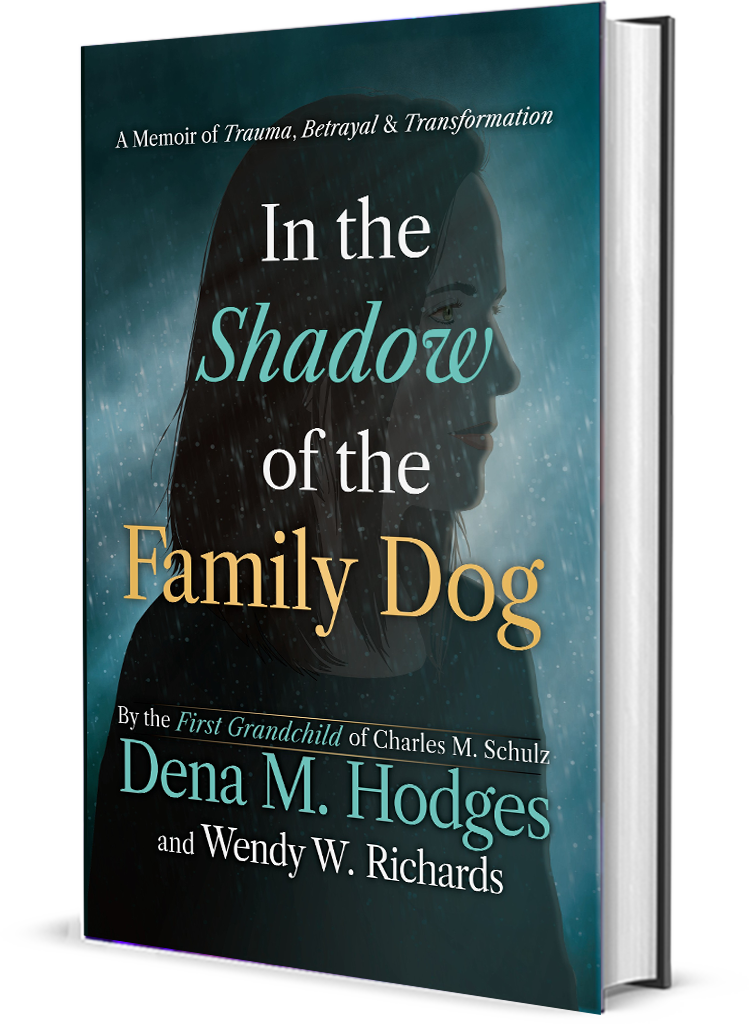
In the Shadow of the Family Dog
In the Shadow of the Family Dog will be released in June of 2026. Please sign up for the mailing list for updates on its release. We will provide a link once it becomes available.
“In the Shadow of the Family Dog” is one of the most authentic and faith-filled memoirs I have read. Dena Hodges doesn’t give you a sanitized, tidy story, but pulls you into the raw reality of abuse, family betrayal and years of misdiagnosed chronic illness, and then quietly shows you how God kept meeting her in the very places that should have destroyed her. What moved me most was how faith is part of the suffering itself—the people God sends at the right moment, the hard work of forgiving but not forgetting, and the growing belief that pain can have meaning instead of being punishment. By the end I was not only moved by Dena’s courage, but by the beautiful, understated spiritual legacy of her grandfather, Charles Schulz, whose own faith frames every chapter and points her—and the reader—back to Jesus. “This book is a lifeline for survivors of family abuse, warriors of chronic illness who have been dismissed or disbelieved, and any Christian who needs to be reminded that we can be hard pressed on every side and still not crushed.”
Reviewed from an advance copy. Opinions are my own.
Grace Ellington
This book is a must-read for Lyme warriors, sepsis survivors, anyone
living with so-called ‘functional’ or ‘unexplained’ diagnoses, medical
trauma survivors, and the caregivers who hold them together. It is not
an easy read — the medical trauma and family betrayal are graphic and
real — but it is an essential one. When you are ready, In the Shadow of
the Family Dog will look you in the eye and say what you have always
known but rarely heard reflected back: you were not crazy, you were not
exaggerating, and you were never alone. You were sick. You were
profoundly unsupported. And someone who walked that same road has now
mapped it, in ink, so that your own story might be a little less
impossible to tell.
Ink Drinker
As a clinician, I was especially moved by the boundary work and the nuanced approach to forgiveness in the later chapters. Hodges makes an important and clinically sound distinction between forgiveness and reconciliation, articulating concepts around self-protection and no-contact that often take clients months to integrate in therapy. She is equally powerful in her depictions of “chosen family,” and earned secure attachment in adulthood; the safe, steady presence of those who come in where biology fell short provides a tangible, hopeful picture of what corrective relationships can be in real life.
Erin Caldwell, LMHC